The Work
Our work did not begin with restoration, but with attention.
These engravings were created hundreds of years ago, and many survived long after the world that first gave them meaning had disappeared. When we encountered them, something unexpected happened.
Certain forms continued to speak, not simply through their history or original symbolism, but through recognition. They carried gestures, tensions and conditions that still felt quietly human, as though something essential had remained present across time.
The work gradually became less about restoring historic engravings and more about listening to what had endured within them. Restoration simply allows those recognitions to become visible again, recovering the line, weight and character of the original engraving without altering what was already there.
Nothing is invented. Nothing is embellished. What matters is the attention carried into the work.
A short orientation line accompanies each engraving.
It exists as a threshold between you and the crest.
The Snail
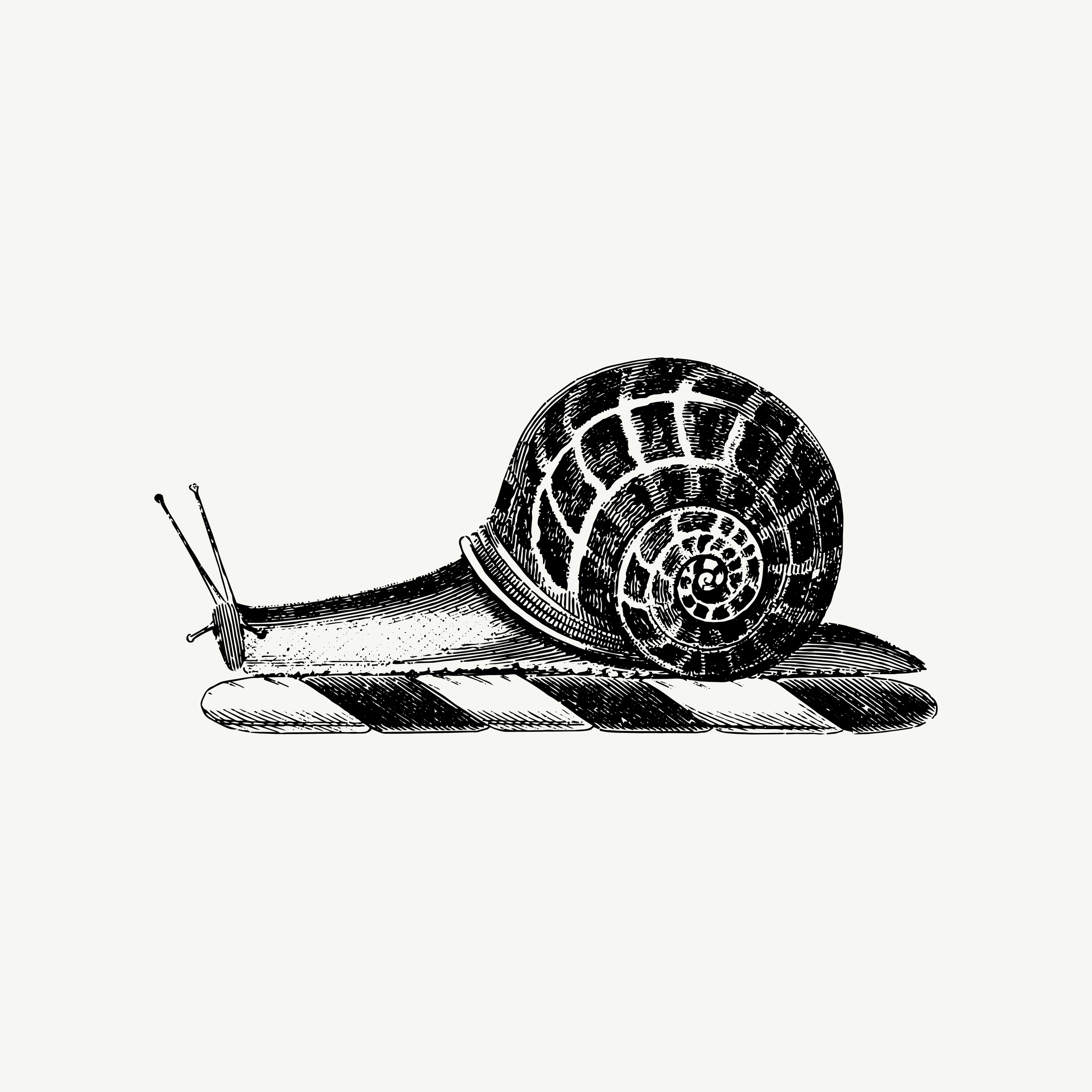
Some things continue quietly
The snail was not chosen. It was recognised.
It revealed itself gradually.
Over time, its presence came to reflect many of the conditions that had shaped the archive itself.
Continuation without urgency. Movement without spectacle. Protection is carried alongside vulnerability. Forms shaped slowly through accumulation.
Unlike many studio marks, the snail does not suggest dominance, certainty, or arrival.
It simply suggests continuation.
That distinction matters.
Even the engraving itself carries this quality.
It remains calm, distinct, and immediately recognisable without requiring ornament or emphasis.
Nothing about it asks loudly for attention.
And yet it remains.
For that reason, the snail has gradually become more than a single crest within the archive.
It has become a form through which Story & Sigil recognises itself.
What Remains
Not every conversation ends where the page does.
Begin with the Archive
Encounter the restored engravings held within the collection